
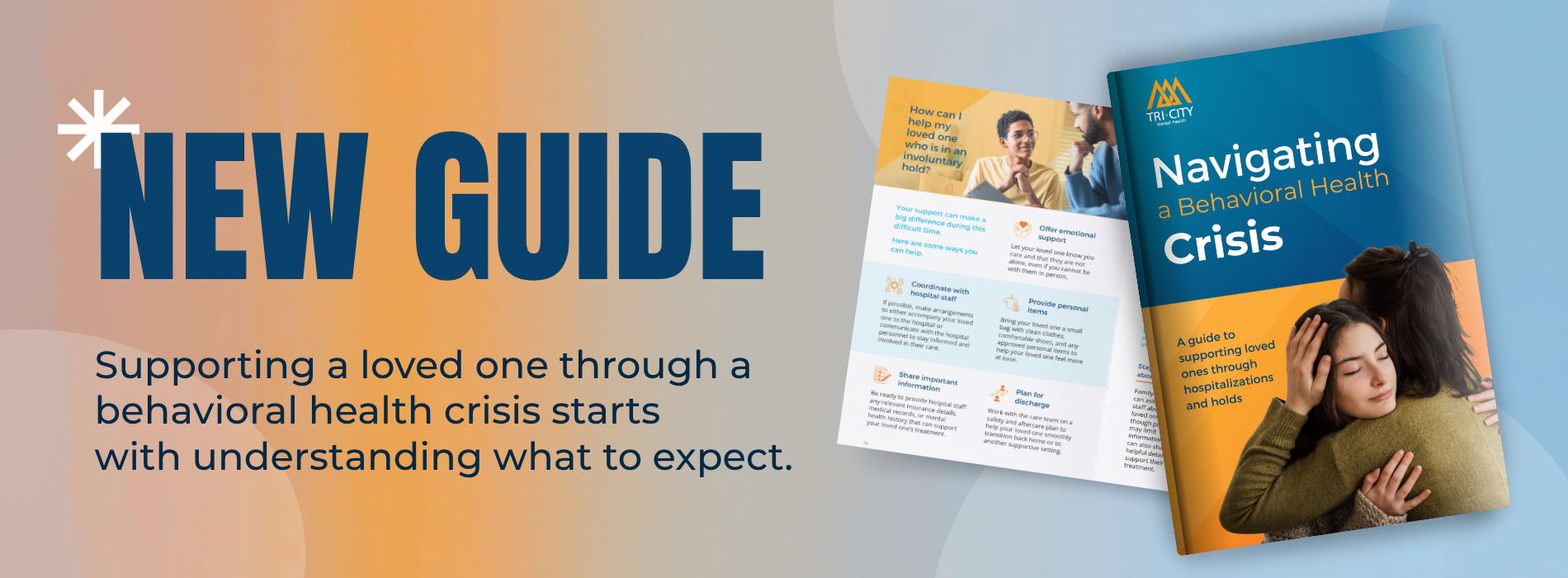
When someone you care about is experiencing a behavioral health crisis, the situation can feel overwhelming, confusing, and emotionally exhausting. Behavioral health crises vary widely, but they often involve moments when a person’s mental or emotional state becomes overwhelming and immediate support is needed to ensure safety. In moments like these, having clear information and knowing what to expect can make a meaningful difference.
To support families and caregivers during these critical times, Tri‑City Mental Health Authority has developed Navigating a Behavioral Health Crisis: A Guide to Supporting Loved Ones Through Hospitalizations and Holds. This guide -- also available in Spanish-- provides clear, accessible information for individuals supporting a loved one who may be experiencing a behavioral health crisis that could lead to an involuntary temporary hold or hospitalization. Developed with funding from the Behavioral Health Student Services Act (BHSSA) and in collaboration with local community partners, this guide offers reliable information and supportive resources to prepare and help families during difficult and uncertain times.
An involuntary hold is a legal intervention used when an individual is experiencing a behavioral health crisis and may be unable to keep themselves or others safe. It is intended to provide short‑term stabilization and ensure the person receives immediate evaluation and care during a critical moment. This resource is meant to inform and empower families—not to promote the use of involuntary holds. It helps caregivers understand available options for care, what the involuntary hold process may look like, and how to advocate effectively for their loved ones.